The Hate Toward Ubuntu Feels Elitist and Misguided

A little over 15 years ago, I nearly bricked my first Android phone by rooting it and uninstalling a required system app. I’m the type of person who, if I have to pay someone to fix a problem I caused, would rather learn to fix it myself — so I asked the guy who bailed me out where to start. He pointed me to a few forums — XDA Developers and Android Central. That was my gateway into the world of Linux.
Acknowledging the Legitimate Complaints
When I started with Linux through Ubuntu, one option was Wubi — a tool that let you install it on a Windows machine without partitioning your hard drive (no longer supported). I understand the appeal: lower the barrier, let people try Linux without the scary technical stuff. But it was exactly those technical details that needed to be addressed, not abstracted away. Twice I had to reinstall the entire system in under a month.
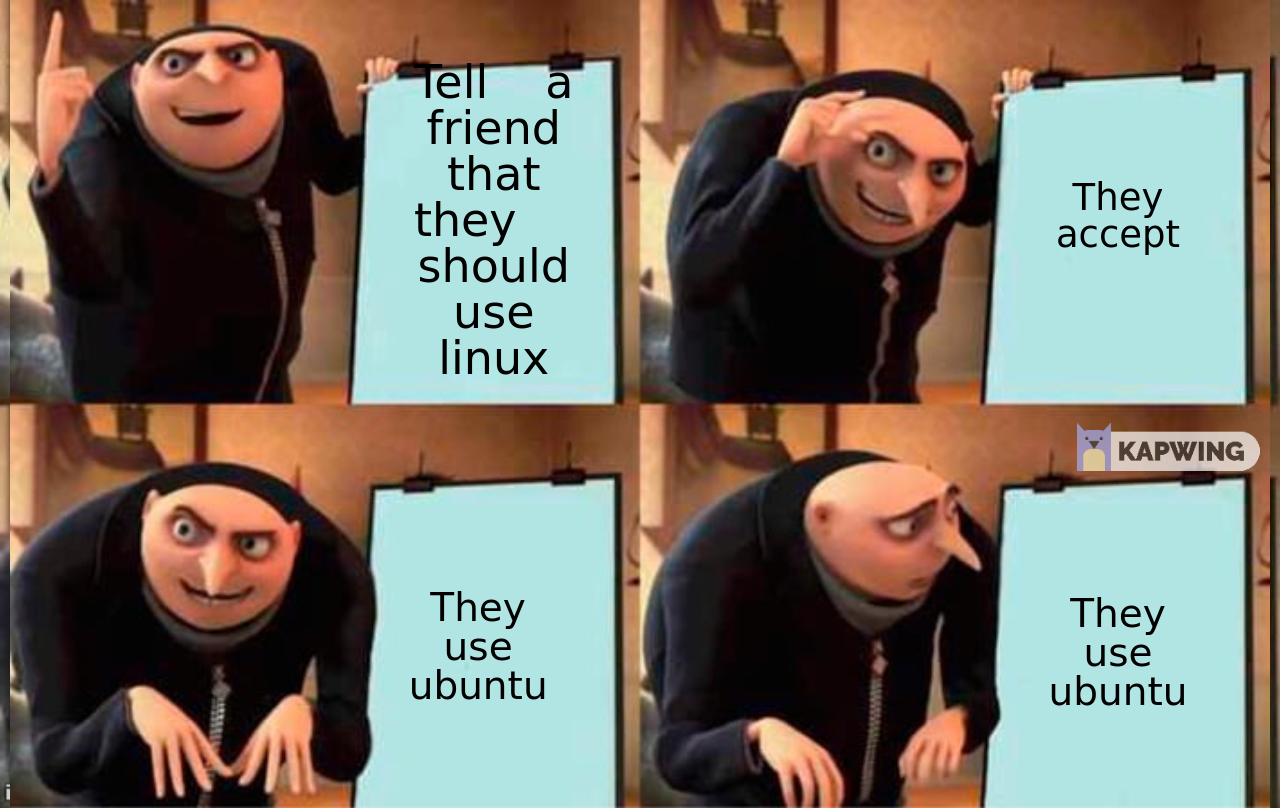
That didn’t stop me from using Ubuntu — I just went the traditional route and installed it on a separate partition.
The Amazon search lens in Ubuntu 12.10 and the rocky early days of the Unity desktop were real mistakes, and ones that pushed me toward Linux Mint and beta testing Elementary OS. Ironically, System76 appears to be repeating a similar pattern — shipping their new Cosmic Desktop on an LTS release while it’s still in alpha — yet the backlash has been noticeably muted. Chris Titus, a longtime vocal critic of Ubuntu, has been remarkably laid back about it by comparison.
One criticism that does carry some weight is that Canonical doesn’t give enough back to Debian, the project Ubuntu is built on. It’s a fair thing to examine — but the reality is more nuanced than the criticism suggests. The relationship between Ubuntu and Debian is a two-way street: by syncing Debian packages into the Ubuntu package collection, Ubuntu benefits from Debian’s upstream maintenance work, and in exchange Ubuntu maintainers upstream changes back to Debian.1
Beyond that, Ubuntu’s massive user base means bugs get discovered and reported at a scale Debian alone couldn’t replicate — and many of those fixes flow back upstream. Canonical also funds full-time engineers who work on core components that Debian and the broader Linux ecosystem depend on. The “Ubuntu takes and doesn’t give back” narrative is a persistent one, but it flattens a complex relationship into a convenient talking point. No hard number exists that definitively proves Ubuntu is a net taker — and the absence of that evidence should give pause to anyone confidently making that claim.
The Double Standard Problem
So let’s talk about the backlash regarding Snaps. I understand the criticism — they’re a proprietary format, and the Snap Store is controlled exclusively by Canonical. The argument is that Flatpak is a superior alternative because it’s open source and supports multiple repositories. But that’s exactly where the argument falls apart. Have you ever tried installing the same Flatpak from different repositories? It’s a nightmare — the same app from different repos can have different versions, different implementations, and conflicting dependencies. I’m looking at you, Fedora and Flathub.
Here’s the thing: in order to make Fedora more appealing to enterprise users, Red Hat needs tighter control over the software they ship — including their Flatpaks. That’s not inherently wrong, it’s just a different set of tradeoffs. If anything, the mistake Canonical made wasn’t the concept of Snaps — it was making them distro-agnostic in a way that created its own fragmentation. A package format tailored to a distro’s specific user base and priorities isn’t a flaw. It’s a design philosophy. The criticism aimed at Canonical for Snaps rarely acknowledges that every major distro is making similar compromises — they’re just not being held to the same standard.
The Toxic Reflex of Mainstream = Bad
This comes down to how popular Ubuntu is. There’s a reason more distributions use Ubuntu under the hood — Linux Mint, Zorin OS, Elementary OS, and dozens of others are all built on top of it. The distros that many Ubuntu critics prefer often wouldn’t exist in their current form without the foundation Canonical built.
One argument I’ve used myself, and one that’s common among a good majority of Linux users, is that Ubuntu isn’t number one on DistroWatch. But here’s the thing — DistroWatch measures page view hits, not actual installs or active users. It’s a rough proxy for curiosity and enthusiasm within an already-technical audience, not a reflection of real-world adoption. Meanwhile, Ubuntu dominates cloud infrastructure, enterprise deployments, and is consistently the first recommendation for anyone new to Linux. Popularity in the spaces that actually matter tells a very different story than a hobbyist ranking site.
Another argument that gets thrown around is that even Linus Torvalds — the creator of the Linux kernel — doesn’t use Ubuntu. He uses Fedora. But the reason why is telling: Fedora keeps up with kernel updates and offers the development tools he needs to compile, test, and debug Linux as a kernel maintainer. That’s an extremely specific workflow requirement. It says nothing about Ubuntu’s quality for the other 99% of users. As seen in this LTT video, when a computer was built for Torvalds, Fedora was the natural choice — because that’s what fits his workflow, not because Ubuntu is inferior. What often gets left out of that argument is that Torvalds has praised Ubuntu for making Linux accessible to everyday users — which is exactly what it was designed to do. Using the right tool for the right job isn’t an indictment of the other tools.
What Ubuntu Actually Did for Linux
One of the biggest achievements Canonical made was pioneering a fixed release cycle — every 6 months for standard releases, with a Long Term Support release every two years backed by five years of security updates.2 Large projects need a schedule to make consistent progress, and Ubuntu delivered one. Ever since the first release — Ubuntu 4.10 “Warty Warthog” in October 2004 — that rhythm has been a cornerstone of what made Ubuntu trustworthy enough for enterprise adoption. That predictable cadence is part of what led to making Debian more accessible to the general public: a structured release gave both users and vendors something they could plan around.
Because Ubuntu committed to that cadence, hardware vendors started taking Linux seriously. When a distro releases on a known schedule, OEMs can qualify drivers and test compatibility in advance. That’s not a small thing — it’s part of why Ubuntu laptops from Dell and Lenovo exist at all, why Dell sells XPS Developer Edition machines pre-loaded with Ubuntu, and why an increasing number of ThinkPads ship with Ubuntu certification.
Ubuntu also quietly became the entry point for millions of developers who never expected to run Linux — through Windows Subsystem for Linux. When Microsoft built WSL, Ubuntu was the default distribution, and it remains the most popular one. For a huge segment of developers, Ubuntu is Linux. Their first apt install, their first sudo, their first shell script — all on Ubuntu. That didn’t happen by accident; it’s the result of Ubuntu building the most approachable Linux experience in the ecosystem.
Then there’s the cloud. Ubuntu dominates cloud infrastructure — AWS, Azure, and GCP all list it as a primary or recommended Linux image. When a startup spins up their first server, the odds are overwhelmingly high that it’s running Ubuntu. The trust Ubuntu has earned in enterprise and commercial spaces didn’t come from marketing — it came from years of shipping stable, well-supported releases on a schedule that enterprises could plan around.
The Criticism Reveals More Than It Intends To
The Ubuntu hate — the memes, the DistroWatch scorekeeping, the “real Linux users don’t use Ubuntu” posturing — isn’t really about technical merit. It’s about identity. There’s a segment of the Linux community that defines itself by difficulty, exclusivity, and barrier to entry. When a distro lowers that barrier successfully, it doesn’t get credit — it gets contempt. That dynamic is what makes the criticism elitist.
The irony is that many of the people loudest about Ubuntu’s flaws are running distros that owe their existence, their package ecosystem, or their growth in user base to what Ubuntu built. Criticizing Ubuntu while benefiting from its legacy is a bit like complaining about a paved road while standing on it.
Ubuntu isn’t perfect — no distro is. The Snap situation is genuinely worth discussing. The Canonical–Debian relationship deserves scrutiny. The Unity era was rough. But the consistent, disproportionate criticism directed at Ubuntu — while other distros making identical or worse tradeoffs largely escape it — is telling. It says more about the critics than about the software.
If your standard for a “good” distro is one that most people can’t or won’t use, that’s not a technical position. That’s gatekeeping dressed up as expertise.
Conclusion
The whole point of a Linux desktop is to make the operating system available to people who aren’t kernel developers or sysadmins. Every improvement in usability, hardware support, and out-of-box experience is a win for Linux as a whole — not a concession to “casual” users. Ubuntu has been one of the most effective entry points for that mission for over twenty years, and the ecosystem is better for it. Tearing it down doesn’t make Linux more pure. It just makes the community smaller.
Instead, let’s just be happy that more people are using Linux.
-
Ubuntu Project Documentation – Ubuntu is the world’s most widely deployed Linux operating system. ↩︎
-
In August of 2024 and February of 2025 Ubuntu delayed a point release choosing stability of their product. ↩︎